Building your own depot software? Orchestrate the electric depot with us.
You run the vehicles - and you build the software that runs them. Electrification adds a second system to the plan: your chargers, your CSMS or EMS, your grid connection. i4B’s eMobility engineers work with your team, or as your team, to build depot orchestration into your own systems and connect them to the energy side. What we build lives in your platform, under your roadmap.

Three things that change the moment the fleet goes electric
Fuel never constrained the plan. Energy does - and the way your software connects to the energy side decides whether that constraint is managed or merely discovered every morning. Orchestrating the depot means connecting the plan in your systems with the power on the energy side.
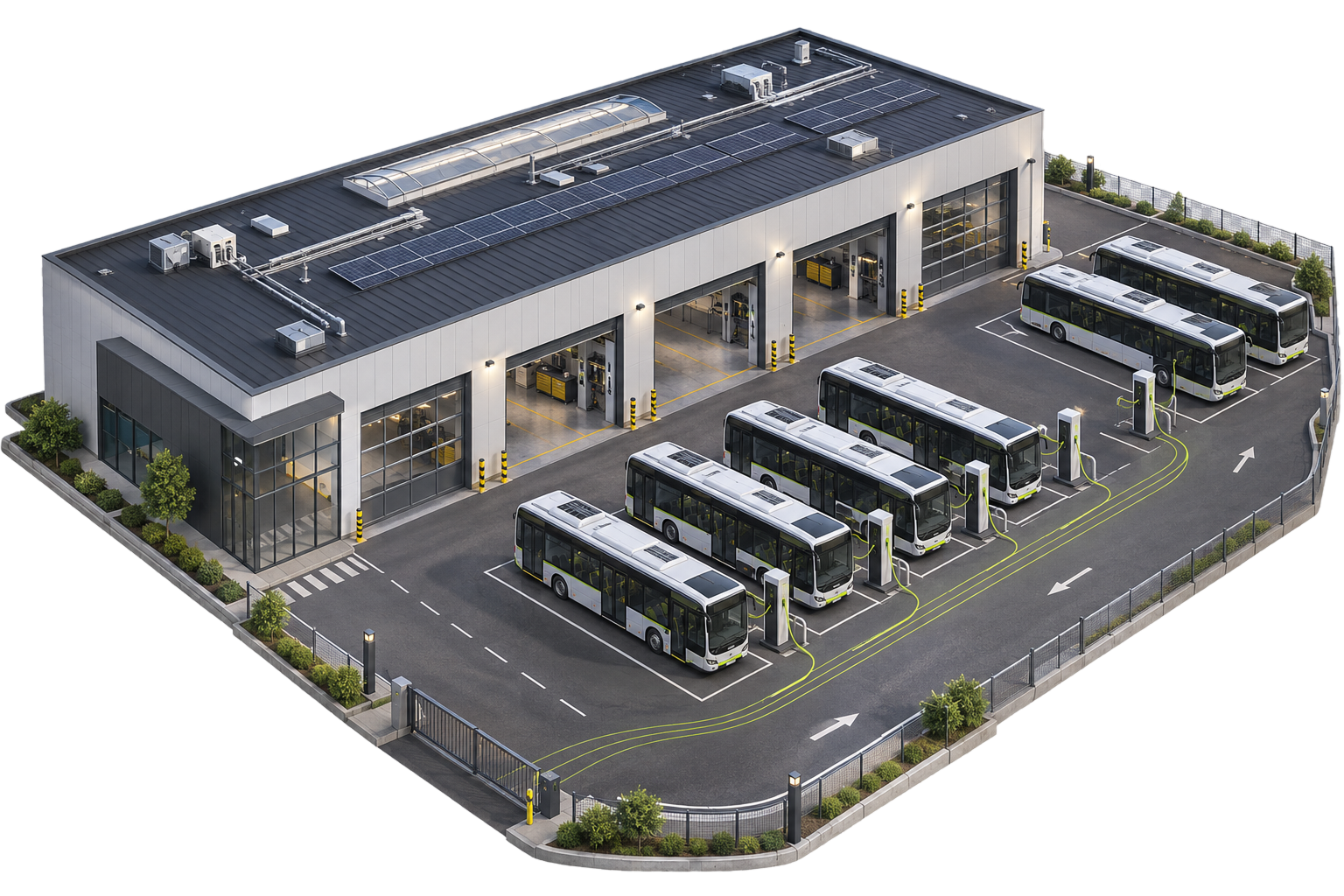
Every vehicle out on time, every morning
Not “charging status green” but “will it have the energy for its block at 05:04” - forecast all night and acted on before it matters.
One screen for the dispatcher
Vehicles, blocks and charging in one place. A charger portal on a second monitor is where late pull-outs come from.
Energy is a cost line per vehicle and route
Tariff windows, grid limits, curtailments and storage all move the bill - and the system should see them, not just the invoice.
Keep your software. Connect the energy. Orchestrate the depot.
Two kinds of support in one engagement: engineers who build depot orchestration into your own systems - with your team or as your team - and the connection that makes those systems work with your chargers, CSMS or EMS and grid connection.
What stays with you
- Vehicles, timetable, drivers, depots
- Your own fleet software, its code and its roadmap
- Contracts with energy supplier and grid operator; chargers you have or plan to buy
- The final decision
What we build into your systems
- Depot model in your data: vehicle, stall, charger, envelope, departure
- Readiness per departure and early warnings in your dispatcher’s screen
- Charging plan under your grid limit, earliest departure first
- Energy cost per vehicle and route, reconciled with the invoice
What we connect
- Your systems to the charging slots: where and when each vehicle plugs in, for which departure
- Your CSMS over OCPI or VDV 463, or your EMS: sessions, stall state, power envelope, tariff windows, storage and PV
- The grid limit as a planning input - and the request for more power when the timetable needs it
- One depot model shared by the plan and the power
What we build lives in your platform - code, documentation and the decisions behind them - and the engineers who built it stay with it for as long as you need.
One working system for an electric depot - built into your software, connected to your power
The outcome is operational, not architectural: a dispatcher who knows at 04:00 what will leave, and a bill that matches the plan.
Orchestration in your own system
Built into your data model and your dispatcher’s screens, on your stack, in your platform.
Readiness per departure, in your system
Projected energy at departure for every vehicle, recomputed all night; an early warning when a pull-out is at risk, so your dispatcher can act.
A charging plan under your grid limit
Earliest departure first within the connection you have, the tariff you pay and the curtailments you are asked for. Storage and PV counted where you have them.
Energy that reconciles
kWh per vehicle and route that match the supplier’s invoice.
- DiscoverWe learn your systems, depots and grid connection and what you need from them; scope and the first depot fixed before you commit.
- BuildDepot orchestration in your systems, in one- to two-week sprints, with your team or as your team.
- PilotYour system connected to the energy side, observing before controlling, readiness measured on real departures.
- Rollout and supportRolled out depot by depot; the same engineers support it in production.
Benefits for your operation
The outcomes we work towards. Readiness and energy cost are measured in the pilot, on your departures.
Departures on time
Readiness forecast all night and acted on before 04:00, not discovered at the gate.
One system for the dispatcher
Vehicles, blocks and charging in one screen; no charger portal on the second monitor.
Lower energy cost
Charging planned into tariff windows and under the grid limit - paying for energy, not for peaks.
Works with the chargers you have
We connect to your CSMS or EMS, and it handles the chargers - whichever manufacturers you mix in one depot.
Reports that reconcile
Energy per vehicle and route matches the supplier’s invoice; CDRs for every session.
Grid requests handled
When the grid operator asks you to reduce power, the plan takes it in and departures hold. You know how many kW you can shed and for how long - the basis for a paid flexibility contract with the grid operator or an aggregator.
Open interfaces from day one
Your systems hold the data model; the energy side is connected through documented interfaces your team can extend.
From discovery to a running depot - in steps you can stop at
Each step ends with a decision you can take or leave. We do not sell the next step before the previous one has proved itself.
Discover
Your systems, timetable, depots, chargers and grid connection; what electrification will ask of your software. Scope and the first depot written down with you.
Build
Depot orchestration built into your systems, with your team or as your team, in one- to two-week sprints you can see.
Pilot
One depot, your system connected to the energy side, observing before controlling. Readiness measured on real departures.
Rollout
The connection rolled out depot by depot: your CSMS over OCPI or VDV 463, or your EMS, and the grid limit of each site.
Support
The engineers who built it support it in production, alongside your team, and keep it current as your energy contracts and systems change.
What changes when the fleet system and the energy side work as one
Seen from the depot floor, not from the architecture diagram.
For fleets that run a depot and build the software that runs it
Public transport operators
Electrifying bus depots under a timetable that does not move for the chargers.
Logistics and distribution fleets
Trucks and vans with long-haul and last-mile departures, often from one hub with one grid connection.
Municipal and utility fleets
Mixed vehicles, many sites, and in-house tools that have to serve all of them.
Coach and truck operators
Who plan charging around bookings and routes in their own systems - at the depot first.
Building a DMS, TMS or ITCS for other fleets? Charging integration for fleet software → · Are you a CSMS or EMS vendor? Fleet integration for energy platforms →
Tell us about your needs
Leave your details and we will get back to you to set up a short call.
- You send the formWe get back to you to agree on a time.
- We talkA short call about your needs and how we could help.
- Next stepsIf there is a fit, we propose how to start.
Thank you. We reply within 24 business hours to pick a slot for your 30-minute call.